

The Human Side of Digital Marketing: Why Authenticity Wins in an Automated World
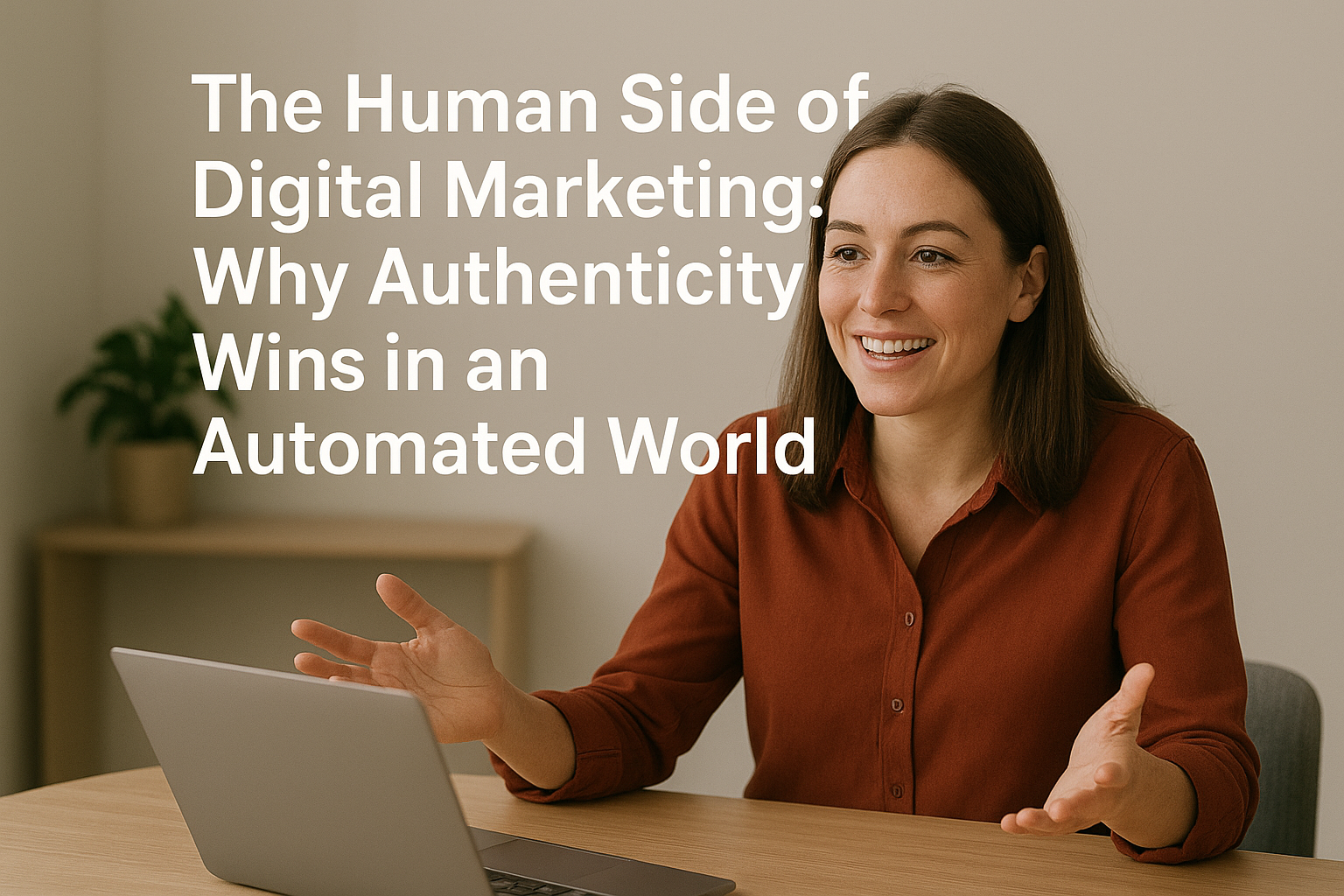
In an age of automation, where algorithms predict behavior and AI crafts messages, a quiet truth is reshaping the digital marketing world: authenticity isn’t optional — it’s the differentiator.
Technology has given brands extraordinary power to reach anyone, anywhere. But reach doesn’t equal resonance. The real challenge now is connection — not clicks.

Collaboration and human insight remain at the heart of great digital marketing.
1. Technology Amplifies — People Connect
Automation and AI have revolutionized how campaigns are built, but they can’t replicate what makes a brand unforgettable: its humanity.
People crave sincerity. They want to feel seen, not segmented. When every ad seems perfectly targeted yet strangely hollow, the brands that stand out are those that sound human.
Authenticity isn’t about being unpolished — it’s about being real. It’s the brand that admits mistakes, shares the process, celebrates its people, and communicates with empathy.
2. The Shift from Data-Driven to Human-Driven
The future of marketing won’t abandon data — it will balance data with intuition. Analytics tell you what people do, but empathy explains why.
Brands that merge insights with emotional intelligence craft campaigns that feel personal, not programmatic. They measure success not only in conversions, but in conversations — genuine dialogue with audiences who trust them.

Digital connection can still be deeply human when empathy leads the interaction.
3. The Rise of Transparent Storytelling
Modern audiences value transparency more than ever. They want to know the people behind the product — their values, their purpose, their voice.
Storytelling built on truth forms community. It replaces persuasion with participation. Instead of asking for attention, authentic brands invite belonging.
This shift is why “behind-the-scenes” content thrives and why vulnerability — once avoided in marketing — now builds loyalty.
4. Building an Authentic Digital Presence
So how do you bring humanity into your strategy without losing precision?
Here are four guiding principles for human-centered marketing in 2025 and beyond:
Listen actively. Treat feedback as a dialogue, not a metric.
Create with empathy. Craft campaigns that reflect shared values and real needs.
Be consistent. Authenticity grows through repetition of truth — not perfection of image.
Show your people. Highlight the humans behind the brand; it builds trust faster than any headline.

Authentic storytelling starts with diverse perspectives and real collaboration.
5. The Future Belongs to the Human Brand
As automation evolves, the brands that rise above the noise will be those that master digital empathy — using technology to enhance, not replace, humanity.
Marketing will always be about influence, but the most effective influence begins with understanding. The future of digital marketing belongs to brands that remember why they started: to serve people, not pixels.
Authenticity wins not because it’s trendy, but because it’s timeless.